Creative Direction
Brand identity
IT
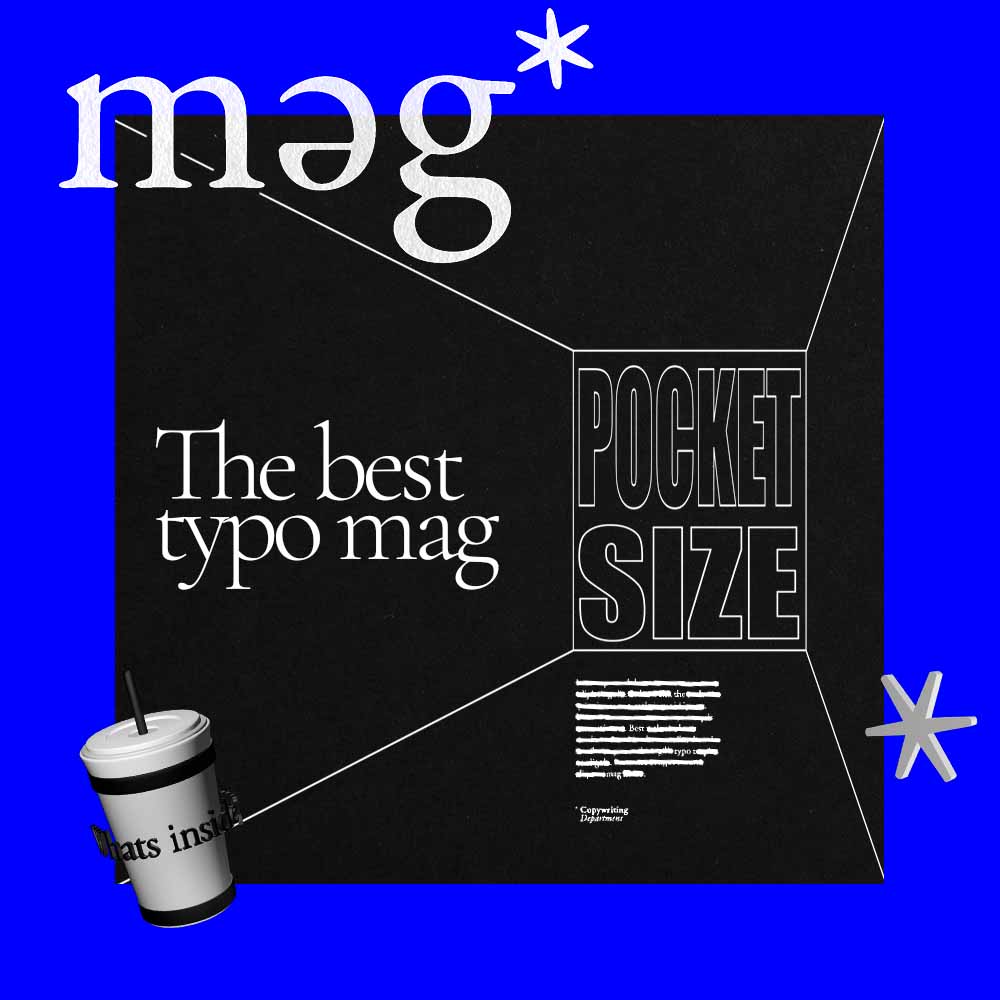
The Best Typo Mag branding
The concept: a magazine that knows exactly what it’s doing
The starting point was simple: create a tribute to typography through a magazine that celebrates each character’s shape, scale, positive/negative space, and personality.
I imagined a “self-aware” magazine—confident, a bit vain (in the best way), and not afraid to stretch letters or place opposite styles next to each other.
The payoff as a statement (and a small provocation)
Even the payoff becomes part of the concept: it uses a variable font approach, starting from what I call a “very boring” Impact font—turning something ordinary into a deliberate typographic character.
Format choices: pocket-sized, wearable, process-first
I designed it as an unusual A5 pocket-sized magazine, because the object itself should feel intentional and portable.
The brand book is “wearable” on purpose—built with construction hooks, ropes, post-its, and pen-made adjustments—because typography is everywhere, and the designer mindset is always active.
The name: schwa + asterisk
The schwa in məg* is there because I like the idea that design can live in everything around us—if you look closely.
The asterisk is part of the identity: it stands for annotations and notes, like a digital translation of post-its—those “small” tools behind almost every real project.
Content system: a community-driven magazine brick
The magazine is designed as a dense object: 100 pages containing 80 posters, 10 articles, 5 paper experiences, and 5 bullet pages.
The posters are imagined as community-managed content: a space where typographic trends are tested without fear, built by “typo friends” who push the discipline forward.
Stationery and digital touchpoints
The stationery “explodes” the identity into physical products: business cards for different team roles, an envelope with a stamped detail reading “an email from the best typo mag”, and a letterhead with fold marks to make the three-fold effortless.
It also includes a dotted notebook and a pencil collaboration concept with Blackwing, extending the idea of typography as daily practice.
Digitally, the website is designed as an extension of the brand world: it hosts the brand book and the poster exploration, plus social and email signature applications.
This project is my personal proof that typography is not a “detail layer”—it can be the origin of an entire brand. Starting from Garamond, I built a system that celebrates type as culture, as community, and as process: confident visuals, portable formats, and always room for notes, corrections, and obsession-level attention.
Thanks to: Claudia Neri; Riccardo Cavallo; Riccardo Agostinelli; Nicolò Botticini; Elena Giugno